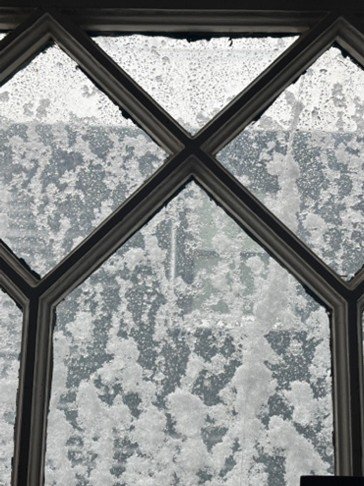

Greetings from what feels like the inside of a snow globe here in Boston. I was lucky to get back in time for this storm from a very productive ABA Council on Legal Education Meeting in Santa Fe (today’s weather there: sunny with a high of 55 degrees). It was an incredible honor to represent AASE along with AASE President Nachman Gutowski at this meeting. We were asked about preparations and expectations involving NextGen, thoughts on alternative pathways to licensure, bar pass data collection, and Standard 316 (requiring a 75% bar passage rate). Among the other affiliate organizations at the table were the NCBE, ALWD, SALT, AccessLex Institute, and AALL-you can see all of them here: https://www.americanbar.org/groups/legal_education/about/leadership/affiliate-organizations/#:~:text=Affiliate%20Organizations%20*%20AccessLex%20Institute.%20*%20American,*%20Society%20of%20American%20Law%20Teachers%20(SALT))
It was also insightful to hear the perspectives of other organizations and entities as we move forward toward NextGen. It was empowering to hear many agree with our ideas about how bar exams are likely to be a blunt gatekeeping instrument no matter how they are configured. It was also quite interesting to see how the ABA Council on Legal Education works –and the issues they are grappling with as well. The maneuvering that is required in any organization that values diversity and inclusion has reached the level of a circus high wire act.
When offered the chance to speak about anything else the Council might need to hear, I spoke about job security and the exclusion of ASP from Standard 405. I told them that the load of teaching to two exams simultaneously in some jurisdictions is asking the most vulnerable in our profession to carry the largest load. I pointed out that if accreditation is contingent on bar pass rate, and we are not changing that as our major licensing pathway any time soon, then ASP professionals should have the same job security as clinical and legal writing faculty. This is especially true while we transition to a new bar exam and many of us have jobs contingent on student success on an exam that is currently nebulous and untested[1].
Will any of this move the needle? Like the portability of NextGen scores: it remains to be seen.
As a bonus, I am including a multiple choice question based on the following rule of meteorological law:
The National Weather Service defines a blizzard as a storm which:
- contains large amounts of snow OR blowing snow, and
- winds in excess of 35 mph, and
- visibilities of less than 1/4 mile for an extended period of time (at least 3 hours).
If the current conditions in Boston, MA are as follows, what is the most reasoned conclusion you can draw?
| Humidity | 96% |
| Wind Speed | N 37 G 52 mph |
| Barometer | 29.41 in (995.9 mb) |
| Dewpoint | 26°F (-3°C) |
| Visibility | 0.24 mi |
| Wind Chill | 10°F (-12°C) |
| Current Conditions | Heavy Snow (up to 29” forecast) |
- I bet Dunks is still open for an iced coffee (Go Pats!)
- I will need to dig out my snow shorts.
- I read that I could power the whole house with my electric car battery-I’m going to google that now while we still have power…
- That’s a blizzard and not the Dairy Queen kind either.
- Can I train the dog to use a litter box?
(Liz Stillman)
[1] This is not to say NCBE is not testing NextGen-they certainly are and have recently tested the delivery system with 1,500 students who were chosen to be representative of the July 2025 bar exam. I know there have been all sorts of beta tests of content as well. But these are test flights, and we will not know if and how this baby can fly until late July 2026.